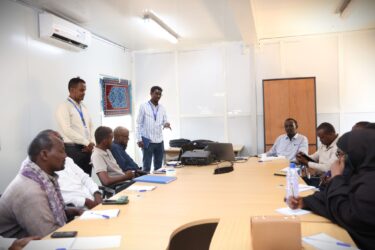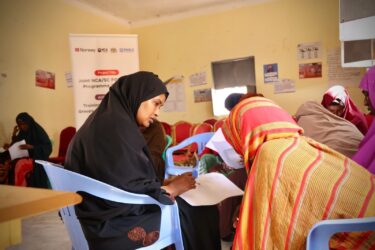
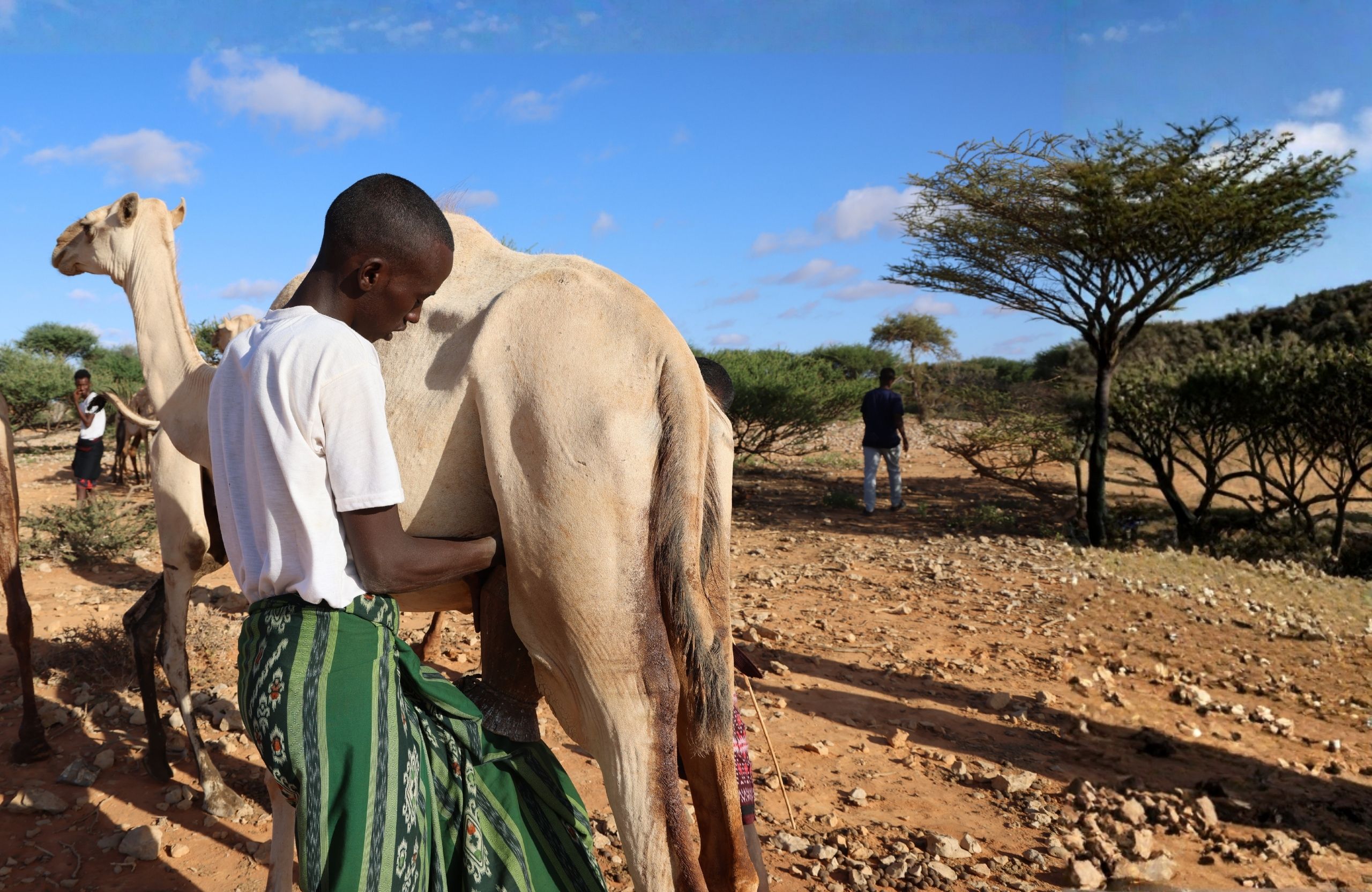
Abdirsaq Ali Mohamed has owned camels in Bayra Village, 35km from Galkacyo, for over ten years. Like most herders in Bayra, except in extreme droughts, milk production was never a problem.
On average, his herd produced 50-70 litres per day, which he collected with support of family members like his son, pictured here.
Abdirsaq’s problems always came after the camels gave their milk.
Like other local producers, he had shifted away from using traditional, locally-made gaawe to plastic containers, increasing the risk of contamination. There was no fast, reliable way for his milk to reach buyers before it spoiled in the heat. Even if his milk made it to the market fresh, his payment depended on whether the vendors could sell it that day.
“I had to transport milk on foot. Spoilage was very common, and when buyers or milk sellers found that the quality had deteriorated, disagreements would arise because everyone was affected.
Producers lost income, transporters wasted effort, and vendors and buyers rejected the product. When sales were slow, there were more disagreements.
We had very few options for managing the risks of buyer rejection, oversupply, or competition from informal traders. In most cases, spoiled and unsold milk had to be thrown away.”
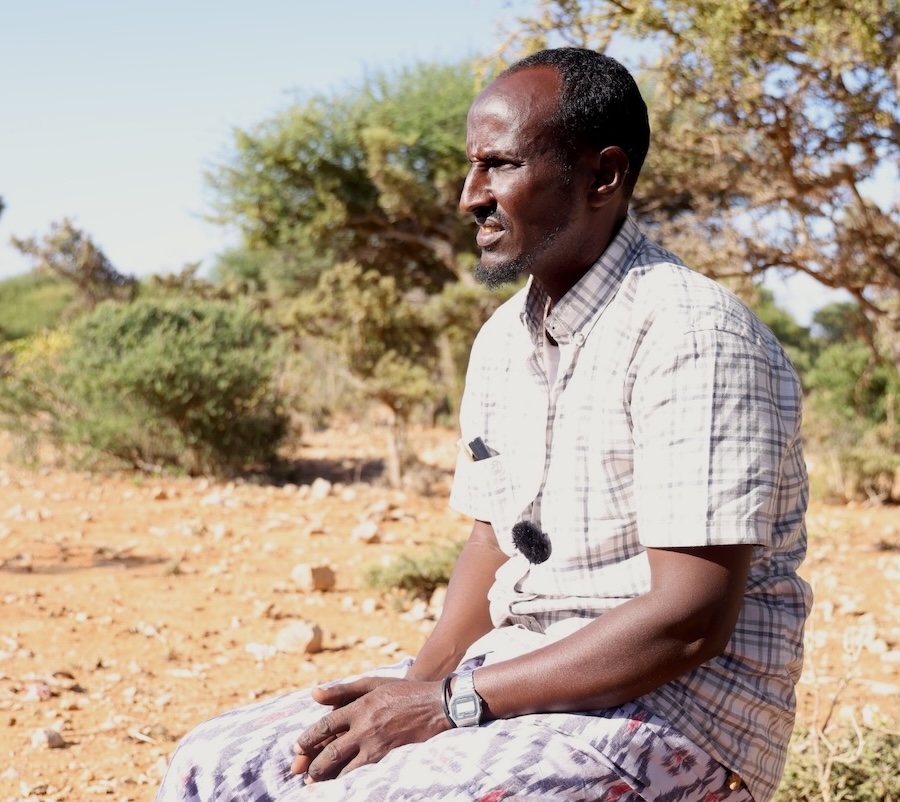
Through the TERRA project, Abdirsaq, shown in the photo above, participated in training on milk handling and hygiene and livestock health. He also received metal mazzi cans to replace the plastic jugs he had been using.
The knowledge and tools he gained immediately improved quality at the start of the value chain.
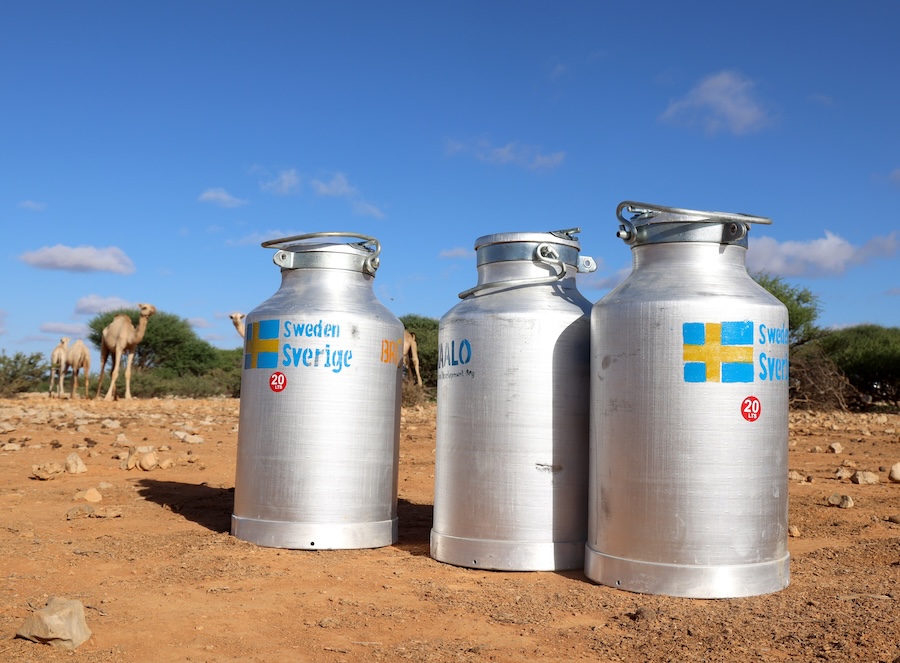
“Today, our milk meets quality standards, and customers are willing to pay fair prices.”
Abrdirsaq became a founding member of Bayra Cooperative, formed under TERRA. Guided by members-led regulations and management structure, the cooperative coordinates joint sourcing arrangements, pricing, payment terms, and sales channels. It also manages the joint assets – motorbikes and refrigeration units – received through TERRA.
“If I compare the situation before and after the project, the difference is clear.
The reliability and quality of our milk supply has improved, and our customer base has grown. Both vendors and households now trust us more because they receive milk on time and in good condition.
Before, I used to transport milk on foot. Now, I simply call the motorcycle driver, and he comes to collect and carry the milk.”