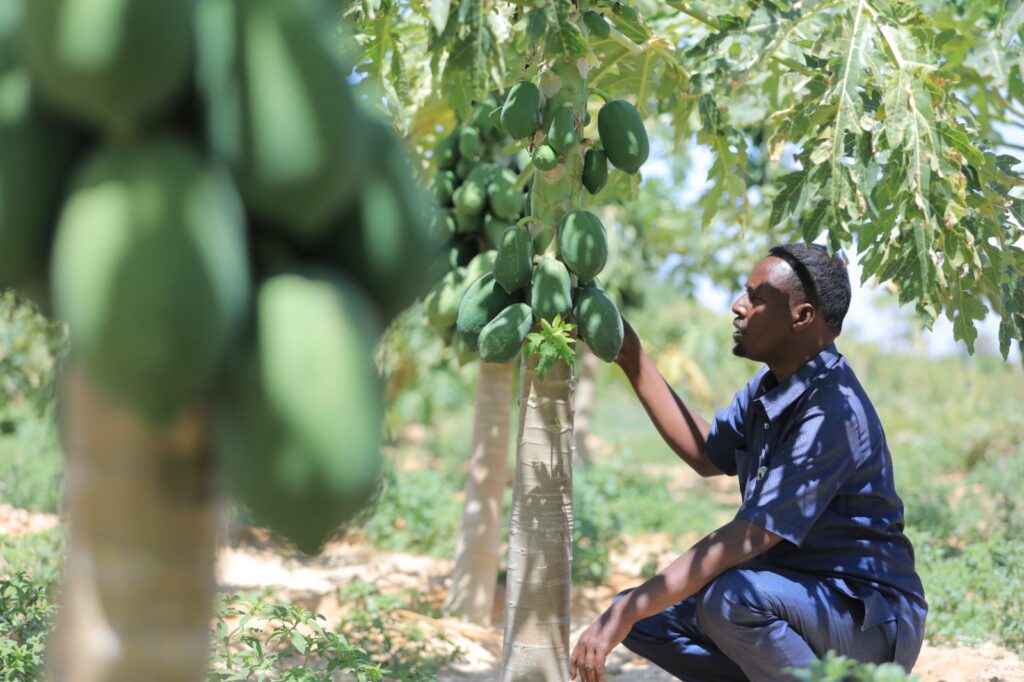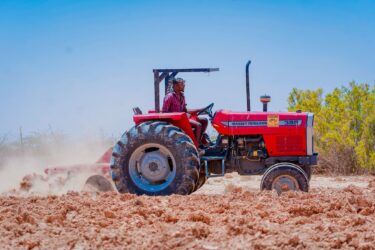
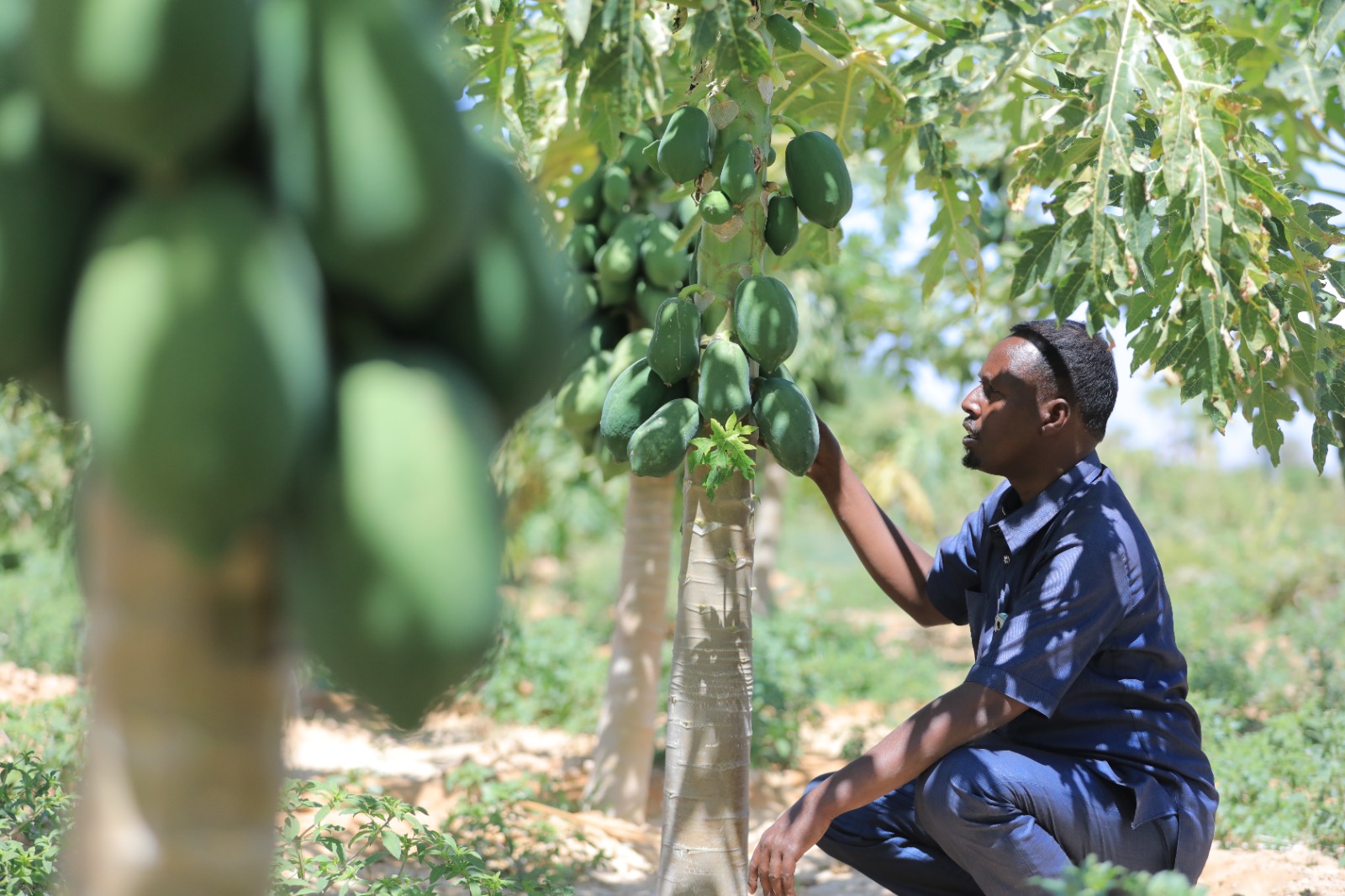
Ahmed Osman has farmed the land in Cuun village for more than three decades. Over those years, his greatest struggle was not a lack of commitment or experience, but the persistent difficulty of accessing quality seeds. Like many farmers in the area, Ahmed depended on seeds purchased from local markets—often expensive, low in quality, and poorly suited to the soil and harsh climatic conditions of Nugal. Season after season, this resulted in weak harvests, undermining his household’s food security and limiting his income. As the sole breadwinner for his family, Ahmed long aspired to grow food crops that could both feed his household and generate income, yet he lacked reliable, locally adapted seeds and the knowledge of where to obtain them.
This reality began to change with the establishment of the Cuun Community Seed Bank under the NORAD-funded climate resilience programme implemented by KAALO Aid and Development. The seed bank, the first of its kind in Puntland since the collapse of Somalia’s central government, was created to preserve, multiply, and distribute indigenous food crop seeds adapted to local environmental conditions. Seed varieties were collected from different parts of Somalia, tested through adaptation trials, and selected based on performance and resilience. Alongside this, KAALO and the seed bank conducted community awareness campaigns in Cuun and surrounding villages to inform farmers about the availability of these improved, locally suited seeds.
Encouraged by this initiative, Ahmed visited the seed bank and accessed food crop seeds through a seed loan system. Under this innovative approach, farmers borrow seeds at the beginning of the season and repay double the quantity after harvest, ensuring the sustainability of the seed bank while fostering a strong sense of community ownership and trust. For Ahmed, this opportunity marked a turning point. For the first time in his 30-year farming journey, he planted food crops using quality indigenous seeds suited to his land.
The results were transformative. Ahmed successfully cultivated his crops, harvested a good yield, and repaid the agreed quantity of seeds to the seed bank. With the harvest, his family began consuming fresh, nutritious food produced on their own farm. Beyond meeting household needs, Ahmed sold surplus produce in nearby markets such as Garowe and Gardo, significantly improving his income.
“I am now food secure,” Ahmed explains.
“My family eats fresh, healthy food from our own farm, and I earn enough to send some of my children to school. For the first time in years, I feel economically independent.”
Achieved within a single planting season, this change shifted Ahmed’s household from chronic vulnerability to stability and self-reliance.
This positive transformation was the result of collective effort. KAALO provided technical support and programme implementation, while the Cuun Community Seed Bank played a central role in mobilizing farmers, managing seed distribution, and maintaining the loan system.
The Development Fund of Norway’s support made it possible to establish and sustain this community-based solution. Equally important was the trust and participation of the local community, which created an enabling environment for success.
Ahmed’s story demonstrates the power of localized, community-driven solutions in addressing long-standing agricultural challenges. It highlights how preserving and promoting indigenous seeds can strengthen food security, improve incomes, and build resilience to climate change. For the Development Fund of Norway and its partners, the success of this initiative in Cuun offers a compelling case for scaling community seed banks to other agro-pastoral regions, where similar gains in resilience and livelihoods can be achieved.