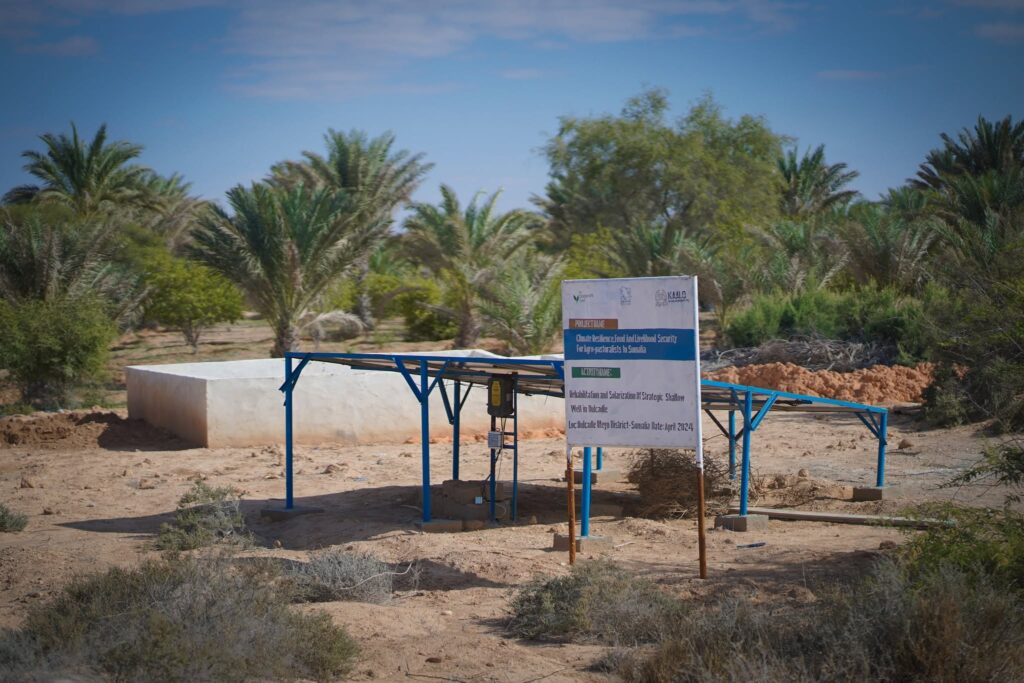
In the arid landscape of Dulcadale village in Ufeyn District, water scarcity and the high cost of fuel have long posed serious challenges to small-scale farmers. Agriculture in this area depends heavily on irrigation, yet for many years the systems available were both unreliable and expensive. Cegaag Yusuf Jama, a 62-year-old farmer, experienced these challenges firsthand. He relied on a fuel-powered irrigation engine that frequently broke down, and the rising price of fuel made it increasingly difficult to operate. As a result, Cegaag was forced to leave part of his land uncultivated, reducing his farm’s productivity and limiting his household income. His situation reflected the wider struggle of agro-pastoral communities in Puntland who are striving to sustain their livelihoods while adapting to climate stress and escalating production costs.
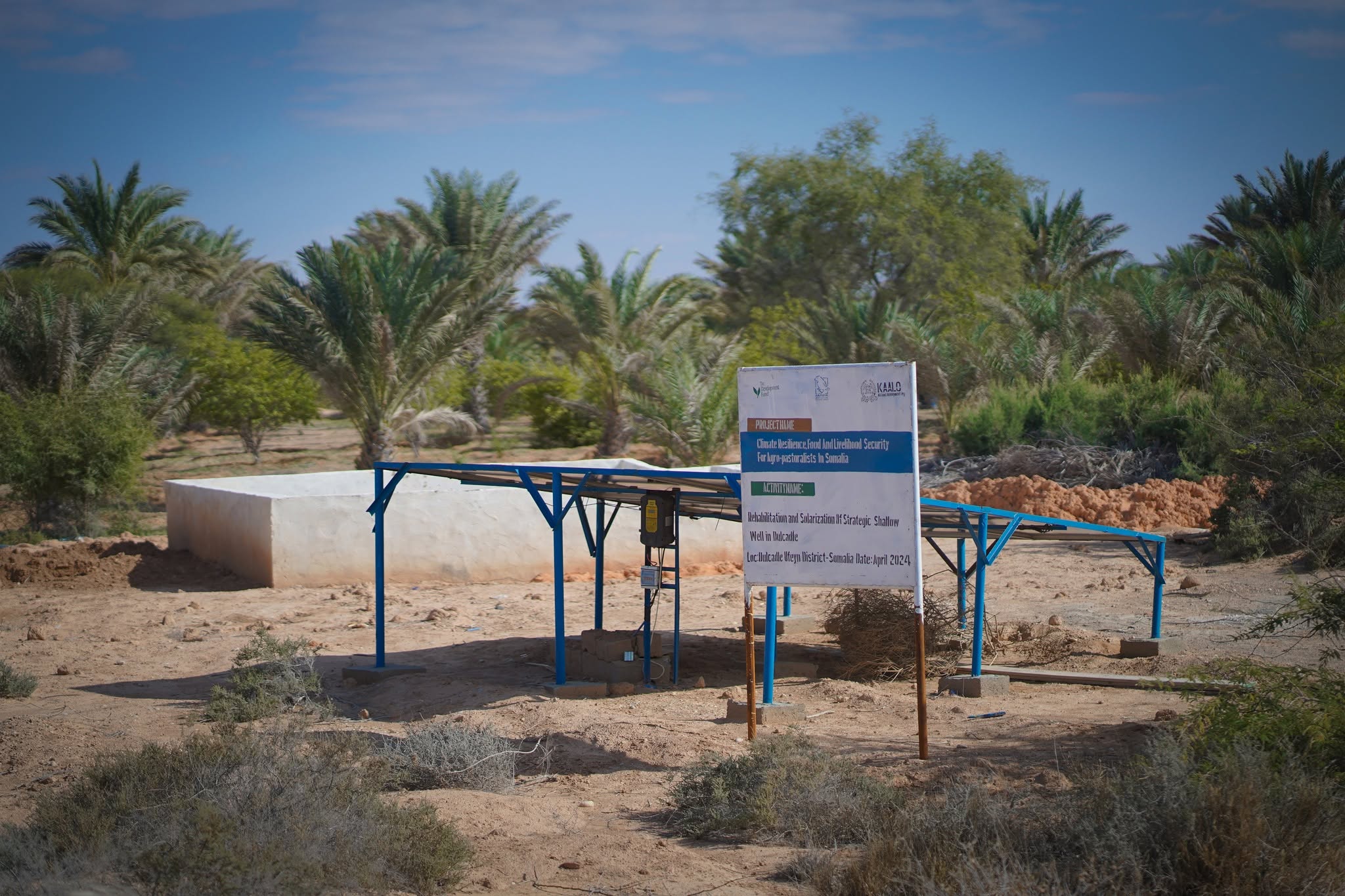
This situation began to change through a climate resilience and livelihood enhancement initiative implemented by KAALO with funding from the Development Fund (DF) and the Darwin Initiative. As part of this intervention, fuel-based irrigation engines in Dulcadale were replaced with solar-powered systems designed to pump water directly from shallow wells. The solarized irrigation system introduced a clean and renewable energy solution that operates with minimal maintenance, requires no fuel, and provides a consistent and reliable water supply. This innovation ensured that farmers like Cegaag could irrigate their crops throughout the year, including water-intensive crops such as date palms.
The impact on Cegaag’s farm has been transformative. With reliable access to water, he has expanded cultivation across his entire plot, growing a wider variety of crops and achieving higher yields than ever before. The elimination of fuel costs has significantly reduced his production expenses, while the consistent water supply has improved both crop quality and market value. Cegaag proudly explains that his farm is now more productive, sustainable, and profitable. He no longer worries about fuel shortages or engine failures, and his income has become more stable. The shift to solar-powered irrigation has given him renewed confidence in the future, strengthening food security and ensuring a steady livelihood for his household.
This positive change was made possible through strong collaboration among KAALO, the Development Fund, the Darwin Initiative, local contractors, and the Dulcadale village community. Each stakeholder played a vital role in planning, installing, and supporting the solar irrigation system, while community involvement has helped ensure its sustainability and proper maintenance.
Cegaag’s experience highlights important lessons for future programming. Access to affordable and reliable energy enables farmers to expand cultivation and introduce new crops. For date palm farmers in particular, solarization of water infrastructure is essential, as each tree requires between 40 and 100 liters of water per day.
More broadly, renewable energy solutions can dramatically reduce agricultural production costs while increasing productivity for smallholder farmers. Above all, the story underscores the importance of active community participation in sustaining climate-resilient infrastructure and securing long-term livelihood improvements.